Finding and keeping skilled employees remains one of the biggest challenges in hospitality. While the restaurant workforce has recovered from the pandemic overall, growth has slowed, and staffing gaps persist. In full-service restaurants, for instance, employment remains 212,000 jobs (or 3.7%) below February 2020 levels. High turnover and ongoing staffing challenges demonstrate why many employers are seeking more sustainable ways to attract and retain talent.
Employer-sponsored education programs like Work & Learn can offer a practical solution. By combining on-the-job experience with nationally accredited culinary education, these programs help businesses develop skilled, loyal teams.
Fast Facts: Training, Retention, and the Workforce
Workforce shortages persist: Full-service restaurants are still 4% below pre-pandemic staffing levels, making them one of the hardest segments to staff. Slowing job growth and high turnover are keeping the talent pool tight.
Skills training drives retention: 94% of workers say they’d stay longer at a company that invests in their learning and development, which can cost the average restaurant over $116,000 annually.
Employer-sponsored education offers real ROI: Companies investing in training see 11% higher profitability, on average.
Most jobs require skills training—but not necessarily a four-year degree: 52% of U.S. jobs need post-high school training, yet only 43% of workers have access to the necessary education and support services.
Flexible programs like Work & Learn can enable career growth without financial burden: Employees can earn nationally accredited culinary degrees while working full-time, applying skills on the job immediately, and accessing scholarships to reduce costs.
Under U.S. tax law, employers can offer up to $5,250 per employee per year in tax-free educational assistance through qualified programs. Depending on the program, these funds may cover tuition, fees, books, and sometimes even supplies, making them a potentially cost-effective way for companies to help workers advance their education. Employers should familiarize themselves with education tax benefits and consult a tax professional.
How Employer-Sponsored Education Programs Work
In most cases, employers either provide tuition reimbursement (employees pay upfront, then are reimbursed after completing coursework) or direct tuition assistance (employers pay schools directly). These programs can include broad tuition assistance benefits as well as specialized partnerships with schools—like Work & Learn, which combines formal culinary education with on-the-job experience.
Online programs like Work & Learn can allow employees to build culinary skills from home and apply them on the job the very next day.
Why Work & Learn Stands Out
Unlike traditional tuition assistance programs that simply reimburse college costs, Work & Learn integrates education directly into the workplace. Offered through Auguste Escoffier Global Solutions, this program is designed specifically for culinary and hospitality employers looking to grow talent from within.
Here’s what can make Work & Learn practical for professionals:
Flexible format options: Employees can attend Auguste Escoffier School of Culinary Arts online or on campus at either the Boulder, CO, or Austin, TX, locations.
Efficient timeline: Online coursework typically requires 15 to 23 hours per week. Onlineprograms are designed to be completed in as little as 60-84 weeks (depending on program), making it a relatively short investment of time that can open doors to new career paths.
Immediate application: Employees can share the competencies they’re developing with their managers and request opportunities to practice new skills on the job, turning education into career growth in real time.
Employers can also gain access to scholarship opportunities for their teams. Employees are eligible for a $1,000 scholarship upon enrollment, with potential employer-matching tuition assistance up to $5,250 per year. This combination of education and immediate, hands-on application can benefit everyone involved.
What really makes the Work & Learn program unique is that you can take that industrial setting and you can take that formal education and really marry the two. That’s the best benefit for the employer, the employee, and the consumer at the end of the day.”
Could Work & Learn Be Right For Your Business?
✓ YES, if you want to:
Access trained talent: Hire Escoffier students or graduates for entry-level roles or externships.
Develop your existing workforce: Help employees build new culinary or hospitality skills while staying on the job.
Improve retention: Provide educational perks that can help build loyalty and reduce turnover.
Save on training: Use on-demand resources like ESource instead of creating everything in-house.
Make a cost-effective investment: Participate for one annual fee, with scholarships provided for employees (even without tuition reimbursement).
Take advantage of potential tax benefits: Tuition assistance may be tax-deductible—consult your tax professional.
⚠ Consider carefully if:
Your business can’t allocate the annual participation fee or any tuition contributions.
Escoffier’s programs don’t align with your immediate skill gaps or workforce needs.
You don’t currently have employees interested in or motivated to pursue additional education.
You aren’t prepared to communicate education perks and encourage program participation.
Why Employees Value Employer-Sponsored Education
Employer-sponsored education programs can be powerful tools that directly impact employee motivation, engagement, and career growth. According to research from Harvard Business Review, 91% of surveyed business leaders agree that tuition assistance (TA) programs provide a competitive advantage by upskilling the workforce. Additionally, 89% recognize the strategic value of offering TA benefits within their industry.
91% of surveyed business leaders say tuition assistance gives a competitive advantage.
89% see strategic value in offering it.
Source: “Realizing and Unlocking the Strategic Value of Tuition Assistance Benefits,” Harvard Business Review
These programs can help employees develop skills while alleviating the financial burden or career interruptions often associated with returning to school. Access to education can foster confidence and clear career paths, which can lead to improved performance and stronger loyalty to employers. Employees who use tuition benefits often feel more valued by their employers, which can strengthen loyalty and long-term engagement.
However, balancing work and study remains a challenge: 45% of respondents with active TA programs report that employees feel they lack sufficient time to pursue education while working.
Statement
% Agree
TA programs give organizations a competitive advantage
91%
TA benefits have strategic value in the industry
89%
Employees lack time to pursue education while working
45%
Source: “Realizing and Unlocking the Strategic Value of Tuition Assistance Benefits,” Harvard Business Review
Offering flexible learning options and financial support can help employees overcome these hurdles, paving the way for meaningful career growth without the financial burden.
“The online program worked best for me because I could do my full-time job and be a full-time student. It was easy because it was flexible. I took off, spread my wings, and never looked back,”* says Cassie Wallace, an Escoffier Online Baking & Pastry graduate and owner of Joan and Pearl’s Bakery.
*This information may not reflect every student’s experience. Results and outcomes may be based on several factors such as geographical region or previous experience.
Career Growth Without Financial Burden
For many workers, career advancement isn’t about earning a four-year degree—it’s about gaining the right skills. By 2031, 72% of jobs will require postsecondary education and/or training. Of those jobs, 42% will require at least a bachelor’s degree, while only 28% will be available to workers with a high school diploma or less. That leaves about 30% of U.S. jobs that will require middle-skills credentials, such as associate degrees, certificates, and vocational training beyond high school but not a bachelor’s degree. This growing demand for postsecondary education and training creates both challenges and opportunities for workers and employers alike.
Jobs requiring just one digital skill pay 23% more (about $8,000 extra per year) while jobs requiring at least three digital skills pay 45% more.
Training increases retention and saves money
Workers who receive professional development opportunities are significantly more likely to stay with their employers.
Avoiding turnover matters: replacing a single worker can cost $25,000–$78,000, while companies that invest in training boost profitability by 11% and are twice as likely to retain employees.
Workers want these opportunities
96% agree that training and skills advancement are essential to a good job.
63% would take digital skills training if it meant advancing their career.
When asked what defines a “good job,” opportunities to train and advance ranked #1, tied with promotions and benefits.
The Value of Skills Training
Impact on Workers & Businesses
52% of jobs require training beyond high school (but not a 4-year degree)
Only 43% of workers have had access to the training they need
Workers who upskill earn 8.6% more on average
Digital skills can add $8K/year or increase wages 45% for advanced skills
According to Gallup’s American Job Quality Study, employees who participated in development programs such as mentorship showed significantly higher job satisfaction—48% reported high satisfaction levels compared to just 29% of those who did not participate in such programs.
Other research reinforces just how powerful learning opportunities can be for retention:
Retention by the Numbers
94% → would stay longer at a company that invests in learning
46% → would leave if their employer doesn’t invest in upskilling
2x → higher retention rates for companies with strong learning cultures
By offering structured programs like Work & Learn, employers can help employees feel valued and motivated, while avoiding the steep costs of high turnover.
The Business Case for Employer-Sponsored Education
Employer-sponsored education programs aren’t just perks. They can deliver measurable business benefits, from reducing costly turnover to improving profits and competitive positioning in a tight labor market.
Retention and Talent Attraction
Education benefits signal to prospective employees that an organization is committed to long-term career development—a competitive differentiator in talent acquisition.
When your employees are confident they’re building a career, they’re gonna want to work harder. They’re gonna want to do their job better. They’re gonna want to improve every day.”
Immediate ROI Through On-the-Job Learning
Education incentives can make a company’s benefits package stronger and more attractive to employees who are eager to grow in their careers, creating a competitive advantage in talent acquisition and retention.
Building a skilled, collaborative team through employer-sponsored education could strengthen your competitive edge.
Invest in Your Team’s Potential
Employer-sponsored education programs can contribute to improved employee retention and engagement by supporting skill development and career advancement. Such programs may help businesses build a workforce better prepared to adapt to industry changes and evolving operational needs.
Through Auguste Escoffier Global Solutions, employees have the opportunity to pursue nationally accredited culinary and hospitality degrees or diplomas while continuing their employment. This investment in your team might not only strengthen your workforce and retention, but also set your business apart as a leader in talent development.
How to Get Started with Work & Learn
Getting started is straightforward. Employers begin with a 30-minute stakeholder meeting to align on goals and partnership structure, then sign a subscriber agreement for $500 per year. The process typically takes about a month for payment processing and alignment. Once the agreement is in place, employees can start enrolling for the next available class start. An Admissions representative typically connects with interested employees the same day they submit information, and new class sessions begin every six weeks.
Taking the Next Step
Ready to support your employees’ growth and elevate your business? Contact Auguste Escoffier Global Solutions today to learn more about Work & Learn and our full range of workforce development solutions.
Want to see more of what Escoffier Global has to offer? Check out these articles next:
Learn why your culinary job postings may be falling flat and how to fix them with clearer requirements, better benefits, and growth opportunities.
February 11, 2026
Subscribe to Our Blog
Get the latest training, hiring, and education insights from our experts to you.
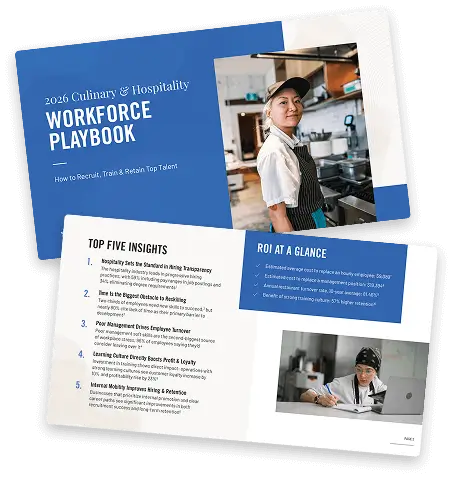
Get the 2026 Culinary & Hospitality Workforce Playbook
Access insights to recruit, train, and retain top culinary & hospitality talent.
Get My Workforce Playbook
Clicking the “Get the Guide Now” button constitutes your express request, and your express written consent, to be contacted by and to receive automated or pre-recorded calls, texts, messages, and/or emails via phone, text, and/or emails by Auguste Escoffier Global Solutions (AEGS) at the number(s)/email you provided, regarding services and products offered by AEGS. You understand that these calls, texts, messages, and/or emails may be generated using an automated or pre-recorded technology. You are not required to agree to receive automated or pre-recorded calls, texts, messages, or emails as a condition of participating in services and products offered by AEGS. You can unsubscribe at any time or request the removal of street address, phone number, and email address via the AEGS website.