As artificial intelligence reshapes industries from law to marketing, restaurant owners are naturally asking: What does this mean for my business?
Headlines warn of white-collar disruption, but here’s a reality that should reassure culinary employers: your industry seems positioned to remain resilient. Research suggests that roughly 30% of white-collar tasks could be automated by generative AI, while less than 1% of blue-collar and trades tasks face the same risk.
But the world is still changing, and business owners would be wise to reevaluate their workforce development strategy in the age of AI.
We examine what’s actually changing in food service, what remains constant, and how smart restaurant owners can adapt their workforce strategies to attract, train, and retain exceptional talent in the modern era.
What’s Changing: AI and Automation in the Culinary Industry
Yes, technology is making inroads into restaurant operations, particularly in high-volume chains looking to boost efficiency at scale. Chipotle has experimented with robots like “Autocado” for avocado prep and “Chippy” for tortilla chips, cutting specific prep tasks roughly in half. Sweetgreen and others have piloted robotic assembly lines for bowls and salads. Robot servers—wheeled units that deliver dishes and bus tables—have deployed in dining rooms around the world.
Behind the scenes, AI-powered scheduling software and workforce management tools are becoming more and more common, with 37% of operators planning investments in automated labor systems as of 2024 according to the National Restaurant Association (NRA).
But here’s the critical reality check: AI does not appear poised to replace culinary workers.
Restaurant jobs require a combination of skillful, nuanced decisionmaking, human hospitality, and the ability to roll with the unpredictability of service—all of which resist automation.
Skilled trades, like culinary work, appear to be more resistant to replacement than careers in other fields.
In fact, Chili’s ended its robot server trial in 2022 after finding that the robots slowed service and 58% of guests said they didn’t improve the experience. And in the kitchen, robots may be adept at specific tasks, but are not capable of handling the breadth, variety, and pace of culinary work. They may be effective helpers, but are by no means substitutes.
The NRA also found that, though nearly 80% of operators view technology as giving them a competitive edge, only 15% say their tech investments have actually made recruiting or retaining employees easier. Technology addresses efficiency; it doesn’t solve people problems.
What Hasn’t Changed: The Human Element Remains Essential
Despite technological advances, the core of culinary work remains distinctly human. The skills that make restaurants successful—cooking with creativity and precision, providing warm hospitality, adapting to chaos—are exactly what AI struggles to replicate.
Skilled Trades Remain Invaluable
Preparing a beautiful meal from scratch, from selecting ingredients and executing technique to adjusting seasoning and plating with care, remains fundamentally human work.
The U.S. Bureau of Labor Statistics projects 7% growth in chef and head cook positions from 2024 to 2034, which is much faster than average job growth. The restaurant and foodservice sector is expected to grow from 15.7 million workers in 2024 to 17.4 million by 2035. This isn’t an industry bracing for obsolescence; it’s one anticipating expansion, in part because automation cannot replicate the sensory judgment, creativity, and improvisational skills that define culinary work.
Cooking happens in the physical world of tastes, textures, and aromas. It requires reading a sauce’s consistency, knowing when to adjust heat, salvaging an oversalted dish, or improvising when you’re out of an ingredient. These are deeply human capabilities that no algorithm can match.
While robots can follow precise instructions for repetitive tasks, they struggle with the fine motor skills and real-time decision-making that line cooks and chefs perform continuously.
As white-collar professions face disruption, the culinary trade stands out as future-proof, a point that may resonate with candidates seeking automation-resistant careers.
Hospitality Is About Relationships, Not Transactions
Diners want more than just food; they want to feel welcomed and cared for. A host’s warm greeting, a server who remembers your preferences, a bartender’s thoughtful recommendation—these human touches create memorable experiences that build loyalty. When a robot can’t answer a question about the menu or navigate a crowded patio, trust may be undermined, and a human team member must step in.
Hospitality is inherently human, making this aspect of food service difficult to replace.
Front-of-house roles call for empathy, the ability to read social cues, and skill in handling unexpected situations like complaints, special requests, or celebrating a guest’s birthday. These are inherently interpersonal capabilities. Technology may be able to handle behind-the-scenes tasks, but humans provide the front-facing service and quality control that define hospitality.
The Workforce Crisis Hasn’t Disappeared
Perhaps most tellingly, fundamental staffing challenges persist despite technological advances. As of 2024, 59% of restaurant operators reported positions that are hard to fill—an improvement from pandemic peaks but still a clear majority struggling with hiring. Back-of-house roles are especially difficult, with nearly 60% of operators reporting trouble filling cook and chef positions. Front-of-house roles like servers and hosts aren’t far behind, with about half of restaurants finding these positions challenging to staff.
Persistent Labor Challenges in the Culinary Industry
Understanding these ongoing workforce difficulties is essential for developing effective strategies. Turnover remains one of the highest of any U.S. industry.
This revolving door is expensive. Every departing employee represents costs in recruiting, interviewing, onboarding, and training their replacement, not to mention lost productivity and diminished service quality during the transition. The financial burden adds up quickly, especially for smaller operations where each team member plays a critical role.
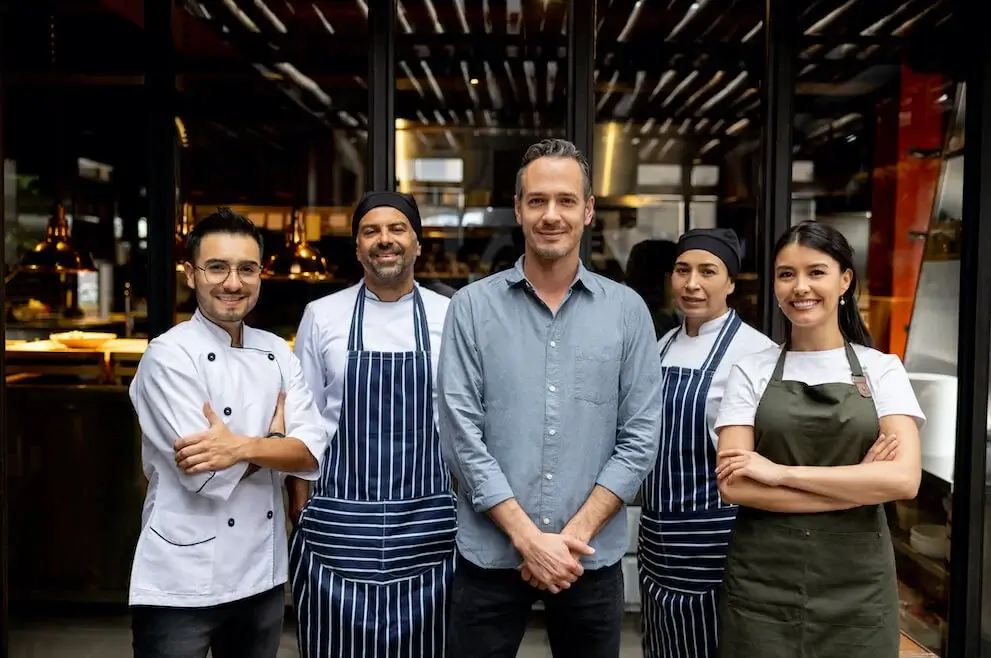
A well-trained staff can work together to make even the most high-pressure kitchen run smoothly.
Here’s what technology hasn’t solved: the human factors driving turnover.
Burnout, unpredictable schedules, limited advancement opportunities, inadequate training, and poor management relationships continue to push workers out the door.
A fancy scheduling algorithm won’t fix burnout if your kitchen culture is toxic. Automation of repetitive tasks won’t retain talent if employees see no path for growth. Workforce stability still depends fundamentally on how you treat, develop, and invest in your people.
Strategic Response: Future-Proofing Your Workforce Through People-Centered Investment
Smart culinary business owners are adapting integrating technology that supports, not replaces, the people behind the food. Here are some top recommendations for dialing in your strategy.
Make Tech a Partner to Your Team
The right technology should make your employees’ jobs better, not eliminate their roles. AI scheduling tools can reduce manager workload and create fairer, more predictable shifts for staff. Automation for repetitive prep work—like that avocado-cutting robot—can free cooks to focus on the creative and skilled aspects of cooking that they actually enjoy.
When evaluating any new technology, ask yourself: Does this tool make work better for my people? Will it reduce their physical strain, give them more interesting tasks, or help them serve guests more effectively?
Technology should augment your team’s capabilities and satisfaction. Importantly, involve your staff in adopting new systems; provide training and seek their feedback. A scheduling AI that ignores employee input on availability becomes a source of frustration rather than improvement.
Implement technology collaboratively, and you can boost efficiency while demonstrating that innovations exist to support your team, not sideline them.
Technology can play a role in your team’s strategy if it is deployed well.
Invest in Human Skills AI Can’t Replicate
In your workforce development strategy, emphasize the distinctly human capabilities that provide competitive advantage: creativity in the kitchen, communication and empathy in service, problem-solving under pressure, adaptability to unexpected situations.
Consider formal culinary training for promising line cooks, leadership development for crew leads, or cross-training staff in multiple roles. Today’s workforce—particularly Gen Z workers entering the field—craves growth and skill development. In one survey, 77% of Gen Z respondents said it’s important that their future job be difficult to automate, with many expressing interest in trades like culinary arts for exactly this reason.
By offering meaningful education and advancement opportunities, you signal that your restaurant isn’t a dead-end job but a viable career in a craft that will endure.
Provide Education Benefits to Boost Retention and Career Growth
One of the most powerful retention strategies is offering education benefits like tuition assistance, culinary school sponsorship, or funding for certificates and continuing education. These programs generate remarkable loyalty. Chick-fil-A’s tuition scholarship program, launched in 2018, has invested millions in helping employees attend college or vocational school. When the chain surveyed scholarship recipients, an astounding 90% said they intend to keep working at Chick-fil-A even after earning their degree, despite having no obligation to stay.
Far from “training them to leave,” educating your workers can build gratitude and commitment. Industry leaders from Starbucks to McDonald’s and Taco Bell have similarly adopted tuition reimbursement and continuing education perks as recruitment and retention tools. Even smaller operations can participate by partnering with local community colleges or culinary schools to co-fund classes, offering modest annual tuition stipends, or paying for certification exams like ServSafe, sommelier credentials, or management training seminars.
Development opportunities like attending seminars, gaining credentials, or enrolling in culinary school, can motivate staff in addition to increasing their skills.
These benefits can demonstrate that you care about employees’ long-term futures beyond just their shifts. In a tight labor market, education perks and genuine career development can distinguish your workplace and dramatically improve retention.
Build a Culture That Supports Growth and Stability
Adapting to the future involves more than technology or formal education programs; it also requires a management approach that recognizes employees as whole people.
Front-line restaurant jobs are demanding: long hours on your feet, fluctuating schedules, emotional labor serving customers.
No AI will change that reality overnight, so consider focusing on policies that improve daily work life. Ensure your scheduling is as fair and predictable as possible. Research shows that more predictable schedules improve well-being and economic security for service workers.
If you’re using sophisticated scheduling software, leverage its forecasting power to create consistency—stable days off, set shifts—rather than simply maximizing labor efficiency at workers’ expense.
Communicate openly with your team about any operational changes so they feel included and prepared. Solicit their input on workflow improvements; those doing the work often have the best insights on how to improve it. Don’t overlook the fundamentals: recognize hard work, provide constructive feedback, and cultivate positive team culture. Poor relationships with managers, marked by a lack of communication, empathy, or respect, are a top driver of workplace stress and attrition.
A high-tech kitchen with low morale will still churn through workers, while a restaurant known for valuing and developing its people will retain talent regardless of what robots are rolling around.
Leadership and culture can’t be automated; they require your intentional effort and commitment.
The Future of Food Is Still Human
The rise of AI is undeniably changing how work happens across industries, including food service.
Yet the essence of culinary arts and hospitality remains rooted in human skill, creativity, and service. Great food and memorable guest experiences come from well-trained, engaged teams.
As AI disrupts white-collar fields, the culinary profession stands out as resilient and future-proof, where human craftsmanship cannot be replicated by algorithms. For restaurant owners charting a path forward, the imperative is clear: adapt strategically by leveraging technology where it genuinely helps, but continue investing in your people as your most critical asset.
Escoffier Global helps culinary businesses develop tailored strategies to help attract, train, and retain high-performing teams of culinary and hospitality professionals.
If you’re ready to reimagine your workforce development approach, reach out to us to explore how we can help you balance innovation with a human-centered development approach that can position your restaurant to deliver the exceptional experiences that only skilled, motivated people can create.
Looking to learn more about modern culinary workforce development? Read these articles next!
Learn why your culinary job postings may be falling flat and how to fix them with clearer requirements, better benefits, and growth opportunities.
February 11, 2026
Subscribe to Our Blog
Get the latest training, hiring, and education insights from our experts to you.
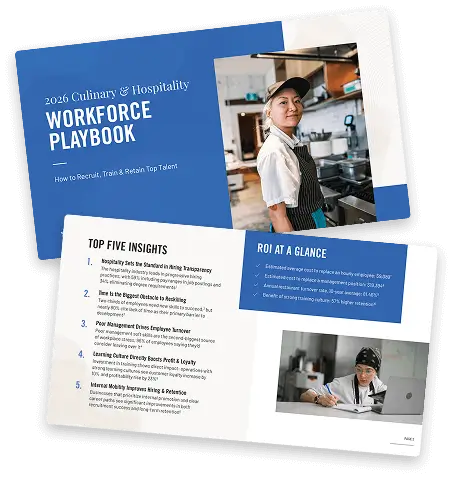
Get the 2026 Culinary & Hospitality Workforce Playbook
Access insights to recruit, train, and retain top culinary & hospitality talent.
Get My Workforce Playbook
Clicking the “Get the Guide Now” button constitutes your express request, and your express written consent, to be contacted by and to receive automated or pre-recorded calls, texts, messages, and/or emails via phone, text, and/or emails by Auguste Escoffier Global Solutions (AEGS) at the number(s)/email you provided, regarding services and products offered by AEGS. You understand that these calls, texts, messages, and/or emails may be generated using an automated or pre-recorded technology. You are not required to agree to receive automated or pre-recorded calls, texts, messages, or emails as a condition of participating in services and products offered by AEGS. You can unsubscribe at any time or request the removal of street address, phone number, and email address via the AEGS website.