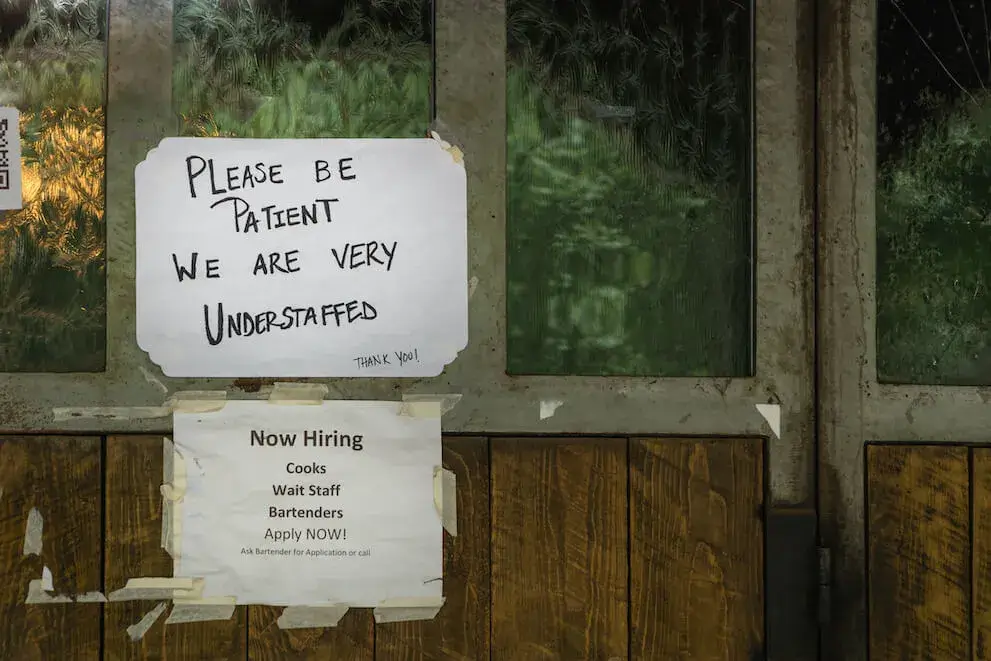
Employee turnover is higher in the restaurant and hospitality industry than in any other sector, yet many businesses still depend on an outdated staffing strategy—post job listings, screen hundreds of resumes… and then hire whoever shows up.
A reactive approach like this keeps operations in perpetual crisis mode, always scrambling to fill the next vacancy.
There’s another solution: building relationships with future employees before you need them, so you can tap into a stream of qualified workers to support your business’ changing needs. That’s exactly what a hospitality talent pipeline delivers—a strategic system that transforms hiring from crisis management into predictable workforce development.
Businesses that prioritize workforce pipeline development can expect to attract and retain higher quality talent, and to do so in less time, at lower cost, and with greater agility and confidence. Here’s how.
What Is a Hospitality Talent Pipeline?
A hospitality talent pipeline is a network of relationships with potential future employees at different stages of their career journeys. Unlike traditional reactive hiring—posting jobs when desperate and hoping for the best—a pipeline approach means you’re already connected to qualified candidates when positions open.
Hiring readiness (they’re qualified and available)
At each stage, you’re building relationships, not just collecting resumes.
Why Pipelines Work in Hospitality
This industry is uniquely suited to pipeline development.
For one thing, skill requirements are often predictable across concepts—whether you run a steakhouse or a vegan café, line cooks need knife skills, food safety knowledge, and kitchen discipline. Unlike industries where roles vary wildly between organizations, hospitality shares common technical foundations that make standardized training valuable.
Career progression pathways are also clear and widely understood. Line cook advances to sous chef, then to chef de cuisine. Server becomes server captain, then front-of-house manager. These established tracks make it easier to identify promising candidates early and develop them toward specific roles.
High-volume hiring needs can make relationship-building especially worthwhile. If you hire 20-30 kitchen positions annually, investing in training partnerships can deliver returns quickly. Compare that to (for example) professional services firms hiring two or three specialized positions per year, where pipeline development costs may outweigh benefits.
Operations with large teams can especially benefit from a robust talent pipeline.
Then there’s the economic case, which can be compelling. Pipeline hiring means candidates arrive with relevant training, cultural familiarity from internships or site visits, and genuine interest in your operation.
If you’re in the industry, you know how challenging it can be to recruit and retain a great team. According to the U.S. Bureau of Labor Statistics’ JOLTS data, accommodation and food services routinely has the highest quit rate of any industry sector—the rate stood at 4.8% in November of 2025, which was more than double that of the overall economy.
Beyond those macro headwinds, competition from other sectors offering remote work and stronger benefits packages makes talent attraction even harder. For now, hospitality’s human-centered nature may protect it from the AI-powered revolution sending shockwaves through other industries—though it may be too soon to draw definitive long-term conclusions.
What Pipelines Can Solve—and Traditional Hiring Can’t
Talent pipelines get ahead of these challenges in ways that emergency hiring can’t.
They dramatically reduce time-to-hire when positions open because you’re selecting from pre-qualified candidates rather than starting from scratch. When a line cook gives notice, you’re not posting to job boards and hoping—you’re calling the culinary program director who knows three graduates seeking positions.
An organization with a strong talent pipeline can fill gaps on its team faster.
Training costs decrease through pre-aligned skill development. If candidates learned fundamentals through culinary school partnerships, your training focuses on your specific systems rather than teaching basics. You’re not explaining the difference between julienne and brunoise—you’re teaching your plating standards and signature preparations.
The High Cost of Hospitality Turnover
A landmark report from The Center for Hospitality Research at Cornell University found that employee turnover generates substantial costs, from recruitment and training to lost productivity. Adjusted for inflation, those factors can combine to cost businesses an average of $9,585 to replace a single employee.
By building relationships early, you can promote a stronger cultural fit with new hires. A candidate who’s toured your facility, met your team, and completed an externship understands your operation’s rhythm before day one. They know whether they connect with your kitchen’s energy, communication style, and standards. This familiarity decreases early turnover, particularly in the critical first 90 days when most regrettable departures occur.
4 Building Blocks of a Hospitality Talent Pipeline
Start with culinary and hospitality training programs at community colleges and culinary schools. High school career pathways programs increasingly offer hospitality tracks. Don’t overlook career changers in adult education programs or current employees seeking advancement into new roles.
Start conversations 6-18 months before you need to hire.
Practical engagement strategies build these relationships. Guest speaking at training programs can position your operation as an industry leader while giving you face time with students. Facility tours and shadowing opportunities let prospects experience your culture firsthand. Externship and internship programs—whether structured multi-week placements or informal job shadows—create extended evaluation periods for both parties.
For Brittney Horn, Corporate Executive Chef at HHS, a provider of hospitality and support services for healthcare and education, these touchpoints offer a chance to introduce students to new career paths while laying the foundation for lasting professional relationships.
“Through partnerships with programs like Escoffier, we’re able to connect with students early and introduce them to career paths they may not have considered, especially in healthcare, where chefs can make a meaningful impact on people’s daily lives,” Chef Horn said. “From recruitment events to ongoing opportunities for collaboration, we’re committed to building lasting relationships, and we’re especially excited for our upcoming campus visit to continue that connection in person.”
Adds Chef Tim Geraghty, Senior Vice President of Culinary and Nutrition Services at HHS: “There’s something powerful about meeting students where they are and helping them see what’s possible.”
Financial support through scholarship or tuition assistance programs demonstrates serious commitment to talent development. Mentor relationships between your experienced staff and students provide ongoing connection points that often convert to job offers.
Additional engagement tactics worth implementing:
Sponsor student competitions or industry events
Offer summer employment programs for culinary students
Participate in career fairs at partner institutions
Host industry panels or networking events
Create advisory board roles for program curriculum input
Provide equipment donations or ingredient supplies for training programs
Chef Tim Condon from Angry Cactus explains how Work & Learn has led to an improved quality of work.
Building Block 2: Aligning Training with Operational Reality
A common frustration: an employee’s previous experience doesn’t always produce the same skills that operators need. This skills-gap problem means new hires often require extensive retraining—sometimes, even if they have credentials. The disconnect wastes everyone’s time and money.
Smart operators influence curriculum development to shape relevant training. Partner with training institutions to provide input on program content—what techniques matter in real kitchens, what equipment students should get familiar with, which food safety protocols you actually use. Offer to host practical training components onsite where students work with your systems, procedures, and standards.
Pipelines Can Fill Gaps in Typical Training
Essential Competencies
Typical Training Coverage
Knife skills & prep techniques
Strong
Food safety & sanitation
Strong
Recipe following & scaling
Strong
High-volume production
Moderate
Equipment troubleshooting
Moderate
Inventory management
Weak
Cost control & waste reduction
Weakhis
Conflict resolution
Weak
How can you build useful training guidelines? Share real job requirements beyond generic job descriptions. Specify the volume expectations, pace requirements, and problem-solving scenarios your team faces. Create feedback loops between your hiring experience and program design so instructors understand where graduates succeed and where additional preparation helps.
Train-the-trainer approaches for internal development programs can ensure consistency when you’re growing talent from within. When your lead line cook becomes an effective teacher, you’re building sustainable talent development infrastructure.
Escoffier Global’s custom training services—including onsite training, train-the-trainer programs, and consulting—provide formal mechanisms for alignment. And our ESource platform offers ongoing skill development that bridges gaps between formal education and operational needs.
Escoffier Global’s custom training services can develop solutions tailored to your specific needs.
Building Block 3: Creating Structure Through Training Partnerships
Formal partnerships outperform ad hoc approaches because they deliver consistency and scale. Institutional relationships survive staff turnover—when your contact retires, the partnership continues. They also make it easier to expand across multiple locations through standardized processes, rather than requiring you to rebuild connections in every new market.
What drives partnership value? Clear expectations matter most.
Define how many candidates you expect to hire annually, what externship supervision you’ll provide, and how you’ll share performance feedback with training programs. Successful models include preferred employer programs (giving you first access to graduates), tuition assistance through programs like Work & Learn from Escoffier Global, and sponsored cohorts designed specifically for your operation’s needs.
Build partnerships strategically. Start with institutions that share your quality standards and geographic footprint. Escoffier Global’s EConnect platform offers access to culinary students nationwide, while custom training services help align curriculum with your operational requirements—eliminating the trial-and-error phase many operators face when building partnerships from scratch.
Partnerships work best when they solve problems for both parties—students get jobs, you get prepared candidates.
Building Block 4: Maintaining Pipeline Relationships
Pipeline development is a long game. Give yourself up to 12-24 months to see full results from initial relationship building to consistent hiring success. This timeline discourages some operators, but patience pays off.
Consistent engagement matters even when you’re not actively hiring. Regular communication with partner institutions keeps your operation top-of-mind for career services staff who match students with opportunities. Alumni networks and ongoing education for past hires demonstrate that career development doesn’t end at hiring.
Culinary school alumni networks can create excellent pipeline development opportunities.
Internal promotion pathways can also show current employees that advancement opportunities exist. And feedback mechanisms to continuously improve pipeline quality help training partners understand what’s working and what needs adjustment.
Structure your pipeline maintenance with regular touchpoints:
Respond to candidate inquiries from partner institutions
Share job openings with career services contacts
Quarterly activities:
Host facility tours or informational sessions for prospective candidates
Participate in program advisory board meetings
Evaluate intern and extern performance with training partners
Update curriculum input based on recent hiring experiences
Annual activities:
Comprehensive partnership review with formal program evaluation
Scholarship or financial commitment renewals
Strategic planning for capacity expansion or new program partnerships
Recognition events celebrating successful placements and graduate achievements
Measuring Pipeline Success
You can’t manage what you don’t measure. Track the metrics that matter to understand whether your pipeline investment delivers returns. Here are some of the metrics that matter most.
Hospitality Pipeline KPIs – and Why They Matter
Key Performance Indicator
Why It Matters
Time-to-fill (days)
Operating short-handed costs you money. Time-to-fill for positions should decrease as your pipeline matures.
90-day retention
Employees that stay for 90 days are more likely to stick with you for the long term.
Cost-per-hire
Cost-per-hire comparison quantifies the financial advantage of pipeline recruitment.
Training days to productivity
Training time required for pipeline versus traditional hires demonstrates skill alignment.
First-year turnover
First-year turnover rates show whether improved cultural fit and preparation translate to longevity.
Calculate ROI by comparing investment in pipeline activities—time spent on partnerships, scholarship dollars, facility tour costs—against savings in recruitment, training, and turnover costs. Developing your pipeline may come with some upfront costs, but those costs are typically offset by avoiding ad hoc recruitment and training, and reducing turnover.
Getting Started: Your 90-Day Pipeline Launch Plan
Phase 1: Assessment and Planning
Begin by inventorying current hiring challenges. Which positions are hardest to fill? Where does early turnover hurt most? What training gaps consistently appear in new hires? This assessment focuses your pipeline efforts on highest-impact areas.
Identify local and regional training institutions. Research community colleges with culinary or hospitality programs, vocational schools, high school career academies, and specialized culinary institutes. Create a target list of 3-5 programs for initial outreach.
Calculate current cost-per-hire and turnover costs to establish your baseline. You’ll need these numbers to measure pipeline ROI and justify investment to stakeholders.
Phase 2: Initiate Relationships
Contact training program directors with a clear value proposition. You’re not asking for favors—you’re offering career opportunities for their graduates and real-world validation for their curriculum.
Attend program events or career fairs to establish visibility. Meet students, faculty, and career services staff. Share authentic stories about career paths in your organization.
Propose initial collaboration that requires minimal commitment from both sides. Offer a facility tour for a class. Volunteer for a guest speaking opportunity. Host one intern or extern for a trial placement. These low-risk pilots build trust and demonstrate capability.
Establishing an externship program in partnership with a culinary school can turn today’s students into tomorrow’s hires.
Phase 3: Formalize and Scale
Once pilot collaborations succeed, establish formal partnership or preferred employer status. Negotiate clear agreements that define mutual expectations and commitments.
Create internal systems for managing pipeline candidates. Assign relationship ownership—who maintains contact with training partners? How do candidates move from awareness to interview to hiring? Document processes so pipeline management survives staff turnover.
Set 12-month goals and metrics tied to your Phase 1 assessment. Aim for specific outcomes: for example, hire three qualified line cooks from pipeline sources, reduce time-to-fill by 40%, or improve 90-day retention by 15 percentage points.
Start small, prove the model, then scale.
Escoffier Global can accelerate this process for companies wanting to skip trial-and-error phases, providing established infrastructure and proven processes for hospitality talent pipeline development.
The Competitive Edge You’ve Been Missing
Talent pipelines transform hiring from crisis management to strategic advantage.
Successful operators are already building these systems. They’re not waiting for the labor market to improve or hoping perfect candidates will magically appear. They’re actively cultivating relationships with tomorrow’s workforce today, and reaping the rewards: faster hiring, better-prepared candidates, stronger retention, lower costs.
Those who wait fall further behind as competitors lock in partnerships with the strongest training programs and establish themselves as preferred employers with the most motivated candidates.
Escoffier Global specializes in hospitality talent pipeline development, with a Work & Learn program that provides education benefits that attract and retain quality talent, the EConnect job platform delivering direct access to motivated candidates from Auguste Escoffier School of Culinary Arts, and custom training solutions to align candidate preparation with your specific operational profile.
Reach out to us today, and let’s start building a reliable hospitality talent pipeline to develop the workforce your business needs.
Looking to develop your team – and your business? Read these articles next!
Reducing turnover often starts with hiring candidates who are better prepared and more likely to stay.
A hospitality talent pipeline can make this easier; by establishing relationships with culinary schools and hospitality programs before positions open, you can gain access to potential new hires with relevant skills, some familiarity with your operation, and genuine interest in the role.
This cultural fit—developed through externships, facility tours, and mentorship—can significantly reduce early departures, particularly in the critical first 90 days.
What is a hospitality talent pipeline?
A hospitality talent pipeline is a proactive hiring strategy that can help connect you with skilled staff before you need them, thanks to a network of relationships with potential future employees at various stages of their career journeys.
Rather than scrambling to fill vacancies as they arise, operators with a pipeline are already connected to qualified, prepared candidates when positions open. This can help reduce time-to-hire, lower training costs, and improve retention compared to traditional, reactive hiring approaches.
How can I find good employees for my restaurant?
The most effective long-term strategy for restaurant staffing is to build relationships with talent before you need to hire.
Developing a talent pipeline through culinary school partnerships, externship programs, guest speaking, and career fair participation can help you forge these relationships. It’s also possible to supplement these efforts with tools designed specifically for hospitality hiring, like Escoffier Global’s EConnect platform, which connects operators directly with culinary students and graduates who are actively seeking positions and have relevant foundational training.
Is it worth partnering with culinary schools for hiring?
Culinary school partnerships can make hiring simpler, faster, and less costly, especially for operations with significant ongoing hiring needs.
Pipeline candidates typically reach productivity faster, require less foundational training, and may have higher 90-day retention rates than those sourced through traditional recruiting. The upfront investment in relationship-building can be offset by ongoing savings in recruitment fees, training costs, and turnover expenses.
Learn why restaurant candidates ghost interviews and get practical strategies to reduce no-shows, speed up hiring, and fill positions faster.
January 26, 2026
Subscribe to Our Blog
Get the latest training, hiring, and education insights from our experts to you.
Get the 2026 Culinary & Hospitality Workforce Playbook
Access insights to recruit, train, and retain top culinary & hospitality talent.
Get My Workforce Playbook
Clicking the “Get the Guide Now” button constitutes your express request, and your express written consent, to be contacted by and to receive automated or pre-recorded calls, texts, messages, and/or emails via phone, text, and/or emails by Auguste Escoffier Global Solutions (AEGS) at the number(s)/email you provided, regarding services and products offered by AEGS. You understand that these calls, texts, messages, and/or emails may be generated using an automated or pre-recorded technology. You are not required to agree to receive automated or pre-recorded calls, texts, messages, or emails as a condition of participating in services and products offered by AEGS. You can unsubscribe at any time or request the removal of street address, phone number, and email address via the AEGS website.