How to Prevent Restaurant Staff Burnout (And Keep Your Team Engaged)
Burnout is one reason restaurants lose good employees. Recognize the signs, address root causes, and build a kitchen culture where people want to stay.
Most culinary professionals know what they signed up for when they enter the field. Late nights, hours on feet, and high-pressure service are part of the job, and many genuinely love the work. But when scheduling is chaotic, recognition is scarce, and there’s no visible path to something better, even committed employees may start to disengage.
With 77% of restaurant operators reporting recruiting and retention as significant challenges according to the 2025 State of the Restaurant Industry report, solving for burnout makes business sense—and it starts with leaders who are willing to listen, then act, across both policy and culture.
The energy of a kitchen tends to find its way to the table, and diners notice. A workplace where employees feel seen, have room to grow, and are surrounded by people who push them to do their best produces better food, better service, and a healthier industry overall.
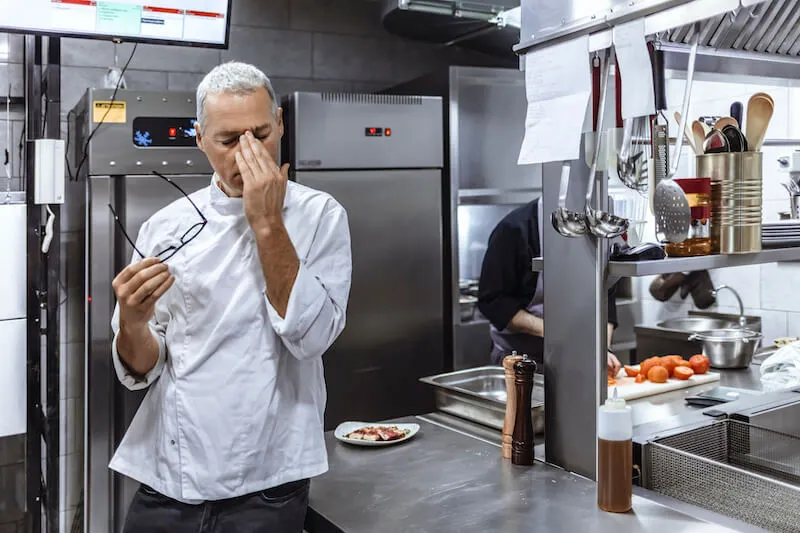
Performance Issues or Burnout Warning Signs?
“Burnout” gets used in everyday speech to describe general fatigue, work-related tiredness, and stress. In that colloquial sense, the fix might be more sleep or a few days off.
But burnout, as psychologists define it, is much more profound. The answer to psychological burnout usually involves serious rethinking at the organizational level, rather than shifting blame to the shoulders of the individuals experiencing it.
Look for these systemic failures masked as performance issues:
Quality Slide: A cook who used to take pride in every plate is now sending out sloppy errors during service.
Disengagement: A junior cook stops showing up to optional training. They’re still working the clock, but they’ve stopped trying to get better at it.
Withdrawal: A server who used to go out of their way for guests now does the bare minimum and deflects feedback.
The “Attitude” Problem: A reliable employee starts calling out regularly, and when you address it, they seem to dig in rather than course-correct.
What’s driving these issues? It could be understaffing, limited room for advancement, inadequate benefits, or a workplace culture that discourages asking for help. When you’re seeing these patterns across multiple people rather than one, it’s a signal to look at systems rather than personnel.
The Anatomy of Burnout
The International Classification of Diseases (ICD-11) classifies burnout as an occupational phenomenon resulting from chronic workplace stress that hasn’t been successfully managed. There are four dimensions of burnout: extreme tiredness, reduced emotional regulation, mental distancing, and depressed mood.
Burnout usually progresses through stages. At first, a new employee might start with a high degree of commitment and passion for the work. After a few months, they may start showing up to shifts a little late, looking at their phone during shifts, and gradually become more and more withdrawn until they’re completely burned out. This slide into burnout can happen slowly enough that neither the employee nor the manager catches it early, and the restaurant industry creates some particularly fertile conditions for it.
Burnout in kitchens often goes unrecognized until it’s already affecting performance, morale, and the people around it.
What Makes Restaurants a High-Risk Environment for Burnout
Most operators didn’t set out to create a burnout-prone environment. But some of the conditions that drive it are baked into how restaurants have traditionally been run, and recognizing them can be the first step toward changing them.
The Physical Reality of Kitchen Work
Long shifts on hard floors, working in heat, repetitive motion, and the sustained physical demand of service don’t leave much time for recovery, especially when those shifts run back-to-back. In the foodservice industry in particular, burnout is linked to high, sustained pressure, including high workload and the need to repeatedly produce large quantities of food exactly to standard.
Over time, constantly sore feet, repetitive strain injuries that don’t get proper recovery time, and a body running on empty can quietly grind down morale in ways that are hard to separate from how someone feels about their job.
Understaffing Puts the Pressure on Whoever Shows Up
The State of the Restaurant Industry report also highlights the struggle at the line level: 78% of full-service operators report difficulty filling chef roles, while 61% struggle with kitchen support. When those positions stay open, the people who show up absorb more than their share, and the unspoken expectation that everyone will cover the gap can become its own kind of pressure.
When a team is shorthanded long-term, staff often read the gap as a sign of how they are valued. While that may not be a fair assessment of an operator who is struggling to hire, resentment can build when a person is consistently doing two jobs for a single paycheck.
Why Invest in the Present if You Don’t See a Future?
Only 13% of employees with a strong sense of purpose at work report feeling burned out very often or always, compared to 38% of those with low purpose, according to a survey by Gallup and Stand Together.
In a restaurant, purpose develops from a sense of:
Significance: Knowing that their work has a direct impact on both the team and the guests.
Growth: Having a clear path for skill development beyond repetitive tasks.
Visibility: Working in an environment where excellence is consistently recognized, not just expected.
Trajectory: Being able to visualize a sustainable career path within the industry.
Providing a sense of purpose might mean a promotion, a new set of responsibilities, or access to education and training. When none of those things are present, it’s no surprise people start looking for somewhere that offers them.
A Culture That Can Discourage Asking for Help
Beyond workload and opportunity, there’s a cultural dimension to burnout in kitchens that’s harder to quantify but equally real.
The restaurant industry has a reputation for the grind-first mentality. It’s seen as a sign of toughness to work long hours, shift after shift, without complaining too much. Skipping sleep and forgoing self-care are seen by some as a cost of doing business. That environment has shaped incredible careers, but it has also made it difficult for even the most dedicated employees to say they aren’t okay. It’s at least partially responsible for the burnout and lack of work-life balance in the industry, too.
For those higher in the brigade, encouraging conversations about mental health can feel at odds with the leadership persona the industry has traditionally rewarded. For employees in entry-level positions, advocating for boundaries or admitting to burnout can feel professionally risky. That mentality can also make it hard for employees to protect their time outside of work, blurring the boundary between dedication and unsustainable sacrifice.
The good news is that this is shifting. Awareness of mental health in the hospitality industry has grown in recent years, and more operators and culinary professionals are openly acknowledging that sustainability matters. But the shift isn’t ubiquitous across restaurants yet, and in many kitchens the old norms are still the dominant ones. Operators who want to get ahead of burnout may need to be the ones who actively signal that it’s safe to talk about.
What Operators Can Do About Burnout
Burnout prevention tends to come down to consistent practices at three levels: how the organization is structured, how managers show up day to day, and what support individual employees can access.
Burnout Prevention Strategies by Level
Organizational
Management
Individual
Competitive pay & benefits
Clear, realistic expectations and consistent follow-through
Access to peer support networks
Workflow systems that reduce friction
Thoughtful delegation and skill development
Mental health and wellness resources
Standardized, fair workplace policies
Meaningful recognition & conflict resolution
Pathways for career advancement
Schedules that account for recovery time
Modeling sustainable habits & safety
Protected boundaries & time off
At the Organizational Level
Organizational decisions set the conditions under which everything else operates. These are the choices that shape the work environment, including who gets hired and how, what tools the team has access to, what policies exist, and what the operation communicates about how it values its people.
To identify where your organization may be fueling burnout, start with an audit of these areas:
Examine your hiring and onboarding process: Bringing in people who are a genuine fit for the role and the culture, and setting them up properly from day one, can reduce the downstream pressure on everyone else.
Look honestly at the benefits you offer: Health insurance, paid sick leave, staff meals, and flexibility around scheduling requests might mean an employee doesn’t have to pick up a second job or gig.
Invest in tools that reduce unnecessary friction: Scheduling software, inventory management systems, QR menus, and AI-assisted ordering tools won’t solve a burnout problem on their own, but they can free up mental bandwidth that’s currently going toward inefficient, time-consuming tasks.
Promotions are a loud signal: Advancing those who lead with empathy and maintain sustainable work habits shows that the organization values its culture as much as its output.
At the Management Level
Workers who feel they belong are 2.5 times less likely to face burnout, but when a manager negatively affects mental health, employees are twice as likely to disengage.
Cultivating that kind of environment is a deliberate process. Consider focusing on these management habits:
Keep a pulse on everyone’s workload. If the distribution starts to skew, readjust early or check in with those carrying the most weight to ensure they have the support they need.
Make It Safe to Struggle: Frame mistakes as part of the learning curve. If someone is struggling with a specific skill, give them room to lean on what they do well while they practice, then recognize the win once they’ve nailed the technique.
Check In Regularly: Schedule standing one-on-ones to discuss what each person is doing well, where they want to improve, and what they need from you to do their best work.
Address Conflict Early: If you witness tension during a shift, such as two line cooks clashing or a front-of-house dispute that disrupts service, ask those involved to stay a few minutes after close and address it directly. Letting it sit overnight gives it time to harden.
Go to Bat for Your Team: When your team needs something (better kitchen ventilation, adjusted hours, fairer tip distribution), advocate for them.
At the Individual Level
Effective individual support is about empowering your team to spot burnout early and advocate for themselves while there is still time to prevent a crisis.
When employees feel their organization’s mission makes their job important, they are 3.6 times more likely to report a strong sense of work purpose. Leadership can help bridge this gap.
Build individual support into the day-to-day work culture:
Actively encourage employees to use their time off, take breaks, and set limits on what they can take on.
Encourage the whole team, not just management, to share the wins. Whether it’s a guest raving about a dish, a cook stoked on a new special, or a name-drop in a review, don’t let those moments pass in the rush.
Make hospitality-specific mental health and peer support resources visible and accessible. The American Culinary Federation provides a list of organizations like Not 9 to 5, Ben’s Friends, CHOW, and The Burnt Chef Project for peer support, mental health resources, and community.
Helping an employee see a future for themselves can be one of the most powerful tools a leader has. That could mean access to formal education, on-demand skill building, or a clear plan for where this job could lead.
A kitchen culture where people feel supported and genuinely connected can make the work itself feel more meaningful.
Career Development as a Burnout Prevention Strategy
Purpose at work is one of the strongest buffers against burnout, and it’s something operators can actively cultivate. Employees with a strong work purpose are 5.6 times more likely to be engaged in their jobs, and one of the most reliable ways to build that purpose is by giving people something to work toward.
Work & Learn: Education That Fits Around the Job
Staying in the same role for years without a clear path forward can be a direct route to burnout. The Work & Learn program offers an antidote to that stagnation, allowing employees to pursue a degree or diploma from Auguste Escoffier School of Culinary Arts while they work. Because the program is fully online with hands-on industry externship, there is no need for relocation or a leave of absence.
Every participating employee receives a $1,000 scholarship, with scholarship amounts that can increase based on employer tuition contributions, up to $5,250 per year.
ESource: Skill-Building That Works Around Service
Auguste Escoffier Global Solutions’ ESource platform turns workplace training into a tangible path for self-improvement. By offering mobile-friendly, on-demand modules, it allows employees to explore new culinary techniques and earn ACF certification credits on their own schedule.
For operators, it’s a tool to curate specific training; for employees, it’s a way to build a professional future without leaving the kitchen.
Work & Learn vs. Esource
Work & Learn
ESource
Format
Online degree or diploma program
On-demand video content and coursework
Commitment level
Longer-term, structured program
Flexible, self-directed
Best for
Employees seeking credentials and career advancement
Employees looking to build or refresh specific skills
Financial support
$1,000 enrollment scholarship, employer-matching up to $5,250/year
Included with Work & Learn packages
Operator involvement
Partnership with Auguste Escoffier Global Solutions
Select relevant content for your team
A Healthier Kitchen Is Worth Building
Four out of five hospitality professionals report having experienced at least one mental health issue during their career. Beyond reducing turnover, managers who prioritize well-being create a superior culture—one that shows up in the food on the plate and defines the brand for future talent.
If you’re looking for ways to support your team’s development and reduce the conditions that drive burnout, contact our team to find out more about how Work & Learn or ESource might help.
What are the most common causes of burnout in restaurant employees?
Some common causes of culinary burnout include the physical demands, chronic understaffing, inconsistent scheduling, lack of recognition, and limited opportunities for growth.
How can restaurant managers recognize burnout before an employee quits?
Early signs can sometimes look like performance or attitude issues. These include increased callouts, withdrawal from the team, declining quality of work, or disengagement from optional training and development. Because these patterns can be easy to misread, it helps to stay attuned to both changes in individual employees and overall trends among all employees, rather than waiting for a formal issue to surface.
What’s the difference between burnout and everyday work stress?
Work stress is a normal part of a demanding job and tends to ease when circumstances improve. Burnout is what happens when that stress goes unmanaged over a longer period. The ICD-11 classifies it as an occupational phenomenon with three core dimensions: emotional regulation issues, fatigue, growing cynicism toward work, and a reduced sense of personal accomplishment.
How does career development help prevent employee burnout?
Employees with a strong sense of purpose at work are significantly less likely to experience burnout. Career development, whether through formal education, skill-building platforms, or clearly defined growth paths, gives employees something to work toward and helps them stay connected to why the work matters.
What is Work & Learn and how does it help with retention?
Work & Learn is a program offered through Auguste Escoffier Global Solutions that allows restaurant employees to pursue a culinary degree or diploma from Auguste Escoffier School of Culinary Arts while remaining employed. Employees receive a $1,000 scholarship upon enrollment, with amounts that can increase based on employer contributions.
What mental health resources are available specifically for restaurant workers?
Several nonprofit organizations focus specifically on the hospitality workforce. Not 9 to 5, Ben’s Friends, CHOW, and The Burnt Chef Project all offer peer support, mental health resources, and community for food and beverage professionals.
Learn how to handle restaurant staff shortages at peak times with immediate fixes, medium-term stabilization strategies, and long-term retention solutions.