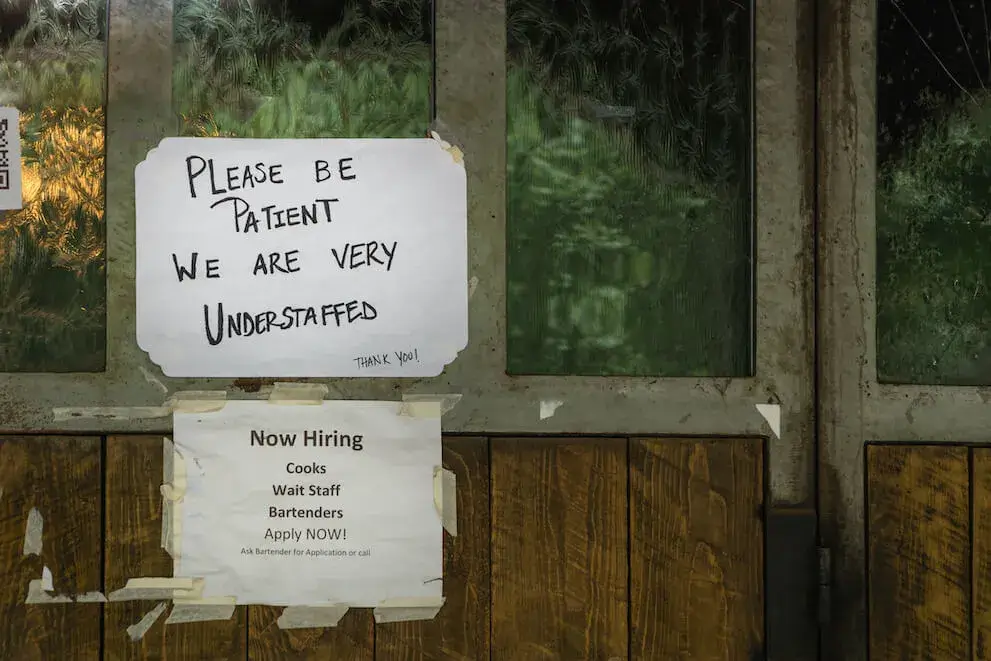
Persistent staffing shortages. Elevated turnover rates. An ever-widening skills gap.
Challenges like these are perennial headwinds for hospitality businesses, which begs the question: Are traditional approaches to workforce development still meeting the industry’s needs? Is there a better way?
Online culinary education has emerged as a strategic workforce solution. It addresses both sides of the employment equation, delivering tangible business outcomes for employers while creating meaningful career growth opportunities for employees.
This dual value proposition is transforming how culinary and hospitality businesses approach talent development in an era when every hire matters.
The Workforce Challenge
For seasoned culinary and hospitality employers, the challenges are all too familiar: persistent staff shortages, elevated turnover rates, and widening skills gaps.
The accommodation and food services subsector faces the highest quit rate of any industry—routinely double that of the overall private sector, according to U.S. Bureau of Labor Statistics data. That turnover is expensive: research from The Center for Hospitality Research at Cornell University identified five cost categories associated with employee turnover that, when adjusted for inflation, average $9,585 per replacement.
The Workforce Challenge at a Glance
Staff shortages remain a top-three concern for employers
Restaurant and hospitality industry has highest quit rate of any sector
These ongoing challenges are compounded by the fact that conventional training approaches often struggle to meet demands. In-person training requires pulling experienced staff from their duties to teach newcomers, and one-time training events rarely produce lasting behavioral change.
For employees seeking formal culinary education, full-time program costs and campus schedules can create insurmountable barriers. One-time workshops rarely produce lasting change.
The industry needs training solutions that are flexible, scalable across multiple locations, and comprehensive enough to build genuine competency.
What Online Culinary Education Delivers
Online culinary education has emerged as a premier resource for culinary and hospitality employers, combining professional chef-led instruction with interactive coursework and hands-on kitchen application.
Students can have the opportunity to engage with instructors through video demonstrations, participate in interactive quizzes and discussions, and complete practical cooking assignments in their own kitchens or workplaces.
Many programs incorporate feedback loops where students submit photos or videos of their work for instructor review, promoting technique development rather than mere information absorption.
In an industry known for demanding work schedules, online training can be a flexible option for culinary employees.
The Work & Learn Model: A Partnership for Growth
While workers can pursue these programs on their own, employers can support them—and build their businesses at the same time—by helping employees pursue culinary education.
Escoffier Global’s Work & Learn program enables employers to help their existing workforce earn diplomas and associate degrees from Auguste Escoffier School of Culinary Arts while continuing to work.
This approach removes traditional barriers to culinary education, since employees don’t sacrifice income or leave their positions to advance their skills. Employers can unlock scholarship opportunities ranging from $1,000 to $5,250 for their team members, creating a powerful retention tool while building a more skilled workforce.
*Based on comparable student population data for Austin and Boulder as currently reported in Integrated Postsecondary Education Data System (IPEDS)
Fitting Training Into Hospitality Schedules
The flexibility of online training proves essential in an industry where “9-to-5” doesn’t exist and personal obligations often compete with professional development opportunities.
Self-paced learning removes the biggest barrier many working adults face: schedule inflexibility. Culinary professionals can complete coursework between shifts or on days off. Mobile-friendly platforms allow learning anywhere—at home, on break, or during a commute.
Asynchronous participation means employees never miss critical training because of schedule conflicts. A night-shift line cook and a day-shift prep cook can complete the same module on their own time, ensuring everyone receives identical instruction without coordinating overlapping availability.
The most effective online culinary training can be applied on the job right away. An employee learns a new knife technique one evening and practices it during prep the next morning. A supervisor completes a conflict resolution module and applies those strategies during the dinner rush.
That immediacy supports multiple operational needs: onboarding new hires with foundational skills, cross-training existing staff for new stations or roles, and establishing consistent standards across locations. Online training becomes part of daily work rather than a separate, theoretical exercise.
In addition to formal training at a culinary school, Escoffier Global’s ESource platform combines quick-reference technique videos for on-the-spot problem-solving with more in-depth courses that include testing and certification. These resources support both just-in-time learning for immediate kitchen challenges and deeper skill development that builds lasting competency across teams.
The Employer Value: How Online Training Strengthens Businesses
Closing Skill Gaps at Scale
Online programs can allow organizations to upskill entire teams simultaneously, regardless of location. When menus change or protocols update, every employee accesses the same training within days—impossible with traditional in-person approaches requiring schedule coordination across multiple sites.
Training existing employees is often faster and more cost-effective than prolonged recruitment cycles in tight labor markets.
Employers who prioritize upskilling their existing teams may see better results in less time – and at lower cost.
Improved Retention and Reduced Turnover Costs
The connection between training investment and employee loyalty is well-documented. The James Beard Foundation has found that restaurants offering career development opportunities such as access to training programs were 3.5 times more likely to retain staff and 1.2 times more likely to hire the staff they needed.
Conversely, lack of professional development opportunities is the leading cause of employee turnover—directly responsible for nearly one in five quits (18.9%).
This creates a clear financial imperative, since money spent on turnover—recruiting, interviewing, onboarding replacements—can easily exceed retention program costs. As Jason Berry, co-founder of Knead Hospitality and Design, told The Washington Post, “You can spend money proactively [on your team] or reactively [on recruiting]… I’d much rather give that money to our teammates.”
When employees see clear advancement paths through training, they view positions as career trajectories rather than temporary stops, fundamentally shifting engagement and commitment levels.
Well-structured online onboarding also helps new hires contribute sooner, with structured learning allowing them to arrive at stations with a baseline of knowledge. Internal promotions offer clear advantages: employees already know the culture and systems, ramp faster, and are more likely to stay.
Consistency, Quality, and Brand Protection
Centralized digital platforms help ensure every employee learns identical recipes, techniques, safety protocols, and service standards. For multi-location operations, this matters enormously. Guests expect the same experience across all locations, whether they visit your flagship or a satellite operation.
Online culinary training can help you ensure high standards across your entire team.
This standardization can also reduce risk. When safety practices are consistent, violations are less likely. Uniform preparation leads to more consistent plates and fewer costly remakes. And in an era when a single negative review can reach thousands, standardized service and operational consistency play a key role in protecting brand reputation.
Measurable ROI and Performance Gains
Compared to workshops, conferences, or traditional tuition, online training delivers exceptional value with no travel expenses, accommodation costs, or significant operational disruption.
The returns are measurable: a meta-analysis conducted by Gallup revealed that businesses able to increase “the proportion of employees who feel that they have opportunities at work to learn and grow” stand to see an 18% increase in profit and a 14% increase in productivity.
Well-trained teams work efficiently, make fewer errors, deliver superior experiences, and upsell effectively. Kitchen staff waste less product and work more efficiently. Front-of-house teams provide more knowledgeable service and handle complex guest requests effectively.
A server who completed wine training can confidently guide guest selections and boost check averages. A chef with leadership training runs smoother shifts, improving coordination and speeding ticket times.
Online training can help current and prospective employees understand options to advance their careers.
These improvements show up in tracked metrics: reduced ticket times, lower food costs through less waste, higher satisfaction scores, and better online reviews. The productivity and profit gains manifest through daily improvements, compounding over time.
Strong development programs also become recruitment tools in competitive labor markets—according to SHRM, 83% of HR managers recognize training as beneficial for recruiting, and 48% of employees cite training availability when choosing employers.
The Employee Value: Career Growth Without Sacrificing Stability
Clear Pathways for Advancement
Hospitality jobs carry an unfortunate dead-end reputation that can drive talent away. Online culinary education counters this by creating visible, achievable advancement paths. When line cooks complete advanced techniques courses or certifications, they become eligible for higher positions and raises.
Harvard University research has indicated that 71% of workers who upskilled reported increased satisfaction afterward.
When employers provide structured learning, they signal that frontline positions are stepping stones, not destinations. A dishwasher can envision becoming prep cook, then line cook, then sous chef—each step supported by accessible training.
Learn While You Earn
For working adults with financial and family responsibilities, flexibility matters. Online programs may offer another option for hospitality workers who may not be able to afford to give up months of income to advance their careers.
Terrydon Williams, who participated in Escoffier Global’s Work & Learn program, described it this way: “It’s convenient for me, the family. You’re getting paid while you’re doing your school, and that’s another benefit of it all. And when your employees are confident they’re building a career, they’re going to want to work harder, they’re going to want to do their job better, they’re going to want to improve every day.”*
*This information may not reflect every student’s experience. Results and outcomes may be based on several factors such as geographical region or previous experience.
Higher Engagement and Confidence on the Job
Skill development produces a motivational feedback loop: employees hone new techniques through online training and immediately apply them at work. These visible improvements can boost confidence and job satisfaction.
LinkedIn’s Workplace Learning Report suggested that seven in ten workers felt a greater sense of connection to their company as a result of learning opportunities, and eight in ten felt their work had greater purpose. Engaged employees deliver better guest experiences, solve problems more creatively, and contribute more actively to team success.
Why This Matters Now
Training isn’t discretionary spending—it’s operational infrastructure as fundamental as kitchen equipment. Yet many operators still view it as expendable when budgets tighten, choosing short-term fixes like hiring bonuses or overtime pay that address symptoms without solving underlying workforce challenges.
Online training can address root causes. It could help reduce turnover by providing growth opportunities. It may close skill gaps without expensive external hiring. It can build bench strength, enabling internal promotions. It could create consistency protecting brand reputation.
Organizations investing in workforce development weather labor volatility better because they’re not constantly recruiting replacements. They adapt to industry changes faster because teams learn new skills rapidly. They build institutional knowledge that compounds over time rather than evaporating with each departure.
Staffing shortages, turnover, and skills gaps will continue shaping the hospitality industry. But businesses that prioritize workforce development can position themselves to handle these pressures more effectively.
Why Training Is Infrastructure, Not a Perk
Short-term fixes address symptoms:
Hiring bonuses fill immediate gaps but don’t build loyalty
Overtime pay maintains operations but accelerates burnout
Reactive recruiting consumes resources without improving capability
Strategic training addresses root causes:
Clear advancement paths reduce turnover
Skill gaps close without the cost of external hiring
Internal promotion pipelines become reliable and sustainable
Operational consistency and resilience strengthen over time
Companies treating training as infrastructure consistently outperform those treating it as discretionary spending.
Building the Future Hospitality Workforce
Online culinary education can address hospitality’s workforce challenges at their source. Employers gain a scalable, cost-effective way to develop talent and retain staff. Employees advance without sacrificing income or stability. Organizations with comprehensive training programs see measurable improvements in performance, engagement, and retention.
Auguste Escoffier Global Solutions offers specialized training platforms designed for working professionals, with industry-focused curriculum built for hospitality schedules. And our Work & Learn program can help support your recruitment, training, and retention goals by connecting career-minded workers with formal culinary education.
Whether your organization needs onboarding systems, ongoing skill development, or structured advancement pathways, Escoffier Global can help design training strategies aligned with your operational needs.
Ready to explore how online culinary training can strengthen your workforce? Contact Escoffier Global Solutions to discuss customized programs supporting your team’s needs and long-term goals.
Curious to learn more about today’s hospitality industry? Check out these articles next!
Discover how employer-sponsored education can boost retention, cut turnover costs, and give restaurants a competitive edge in a tight labor market.
December 23, 2025
Subscribe to Our Blog
Get the latest training, hiring, and education insights from our experts to you.
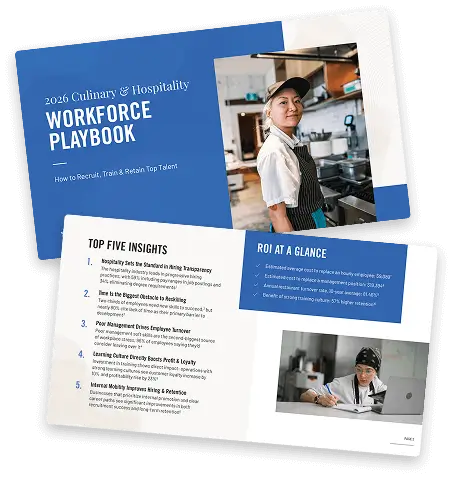
Get the 2026 Culinary & Hospitality Workforce Playbook
Access insights to recruit, train, and retain top culinary & hospitality talent.
Get My Workforce Playbook
Clicking the “Get the Guide Now” button constitutes your express request, and your express written consent, to be contacted by and to receive automated or pre-recorded calls, texts, messages, and/or emails via phone, text, and/or emails by Auguste Escoffier Global Solutions (AEGS) at the number(s)/email you provided, regarding services and products offered by AEGS. You understand that these calls, texts, messages, and/or emails may be generated using an automated or pre-recorded technology. You are not required to agree to receive automated or pre-recorded calls, texts, messages, or emails as a condition of participating in services and products offered by AEGS. You can unsubscribe at any time or request the removal of street address, phone number, and email address via the AEGS website.