
Mushroom Literacy Course
This course explores the fascinating world of fungi, from the hidden networks of mycelium to the roles mushrooms play in health, technology, and society. Learners can gain insight into both wild and cultivated varieties while discovering hands-on culinary applications.
- 100% self-paced
- Test your knowledge with a quiz
- Earn a badge of completion
Course Overview
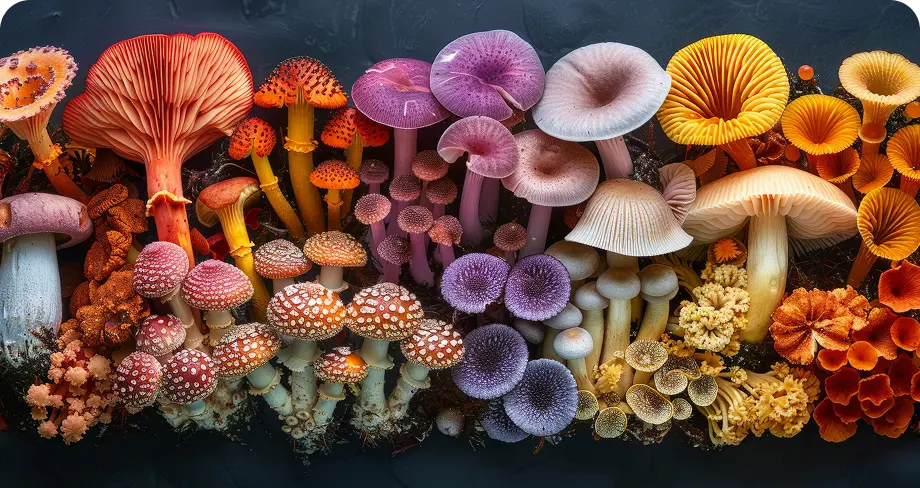
In this course, learners can uncover the diverse dimensions of fungi, beginning with their unique biology and anatomy.
From there, they can dive into mushroom history and global perspectives, explore the connections between fungi and human health, and learn about their vital role in sustainability.
The program also brings the subject to life with practical skills in mushroom cultivation and foraging, paired with culinary techniques that highlight their unique flavors and versatility. Together, these modules create a rich foundation in mushroom literacy.
Learning Journey:
- Describe the classification of fungi as their own Kingdom and explain their distinct characteristics.
- Explain the structure and function of mycelium and its role in ecosystems.
- Discuss the history, folklore, and global perspectives of mushrooms.
- Identify medicinal, nutritional, and culinary uses of mushrooms, as well as allergies and risks.
- Evaluate the role of fungi in soil health, biodiversity, and sustainability practices.
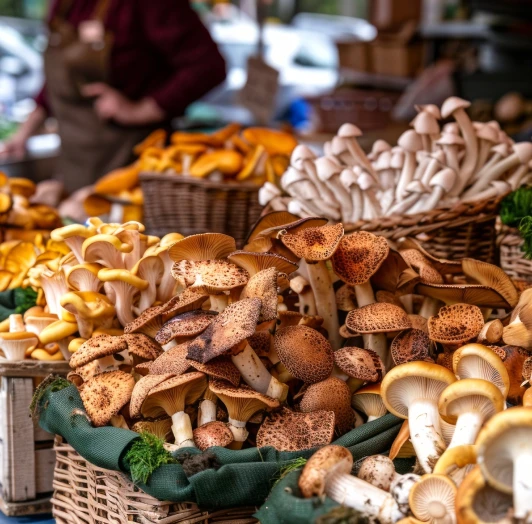
- Compare wild and cultivated mushrooms and describe basic cultivation and foraging principles.
- Apply knowledge of mushrooms in world cuisines, flavors, pairings, and preservation methods.

Course Syllabus
Lesson Topics:
- Kingdom Fungi
- Types of Mushrooms, Distributions, and Seasonality
Lesson Topics:
- Structure and Function
- The Mushroom Internet: Fungal Communication
Lesson Topics:
- History and Folklore
- Roles in Ecosystems and Food Webs
- Global Sustainability
- Mushrooms and Global Social Justice
- Mushroom Art Throughout History
Lesson Topics:
- Introduction to Medicinal and Culinary Uses of Mushrooms
- Introduction to Fungi and Gut Health
- Mushroom Allergies and Medicinal Terminology
Lesson Topics:
- Fungal Biodiversity and Conservation
- Sustainability Practices
- Fungi in Soil Health
Lesson Topics:
- Mushroom Cultivation Techniques: From Low-Tech to High-Tech
- Identifying Edible and Poisonous Wild Mushrooms
Lesson Topics:
- Mushrooms in World Cuisines
- A Brief History of Wild Mushroom Harvesting
- Origins of Mushroom Cultivation
- Wild Versus Cultivated Mushrooms
- Edibility of Wild Mushrooms (A Selection)
- Sourcing Mushrooms: Wild Mushrooms
- Sourcing Mushrooms: Cultivated Mushrooms
- Mushroom Flavors
- Spotlight on Truffles
- Determining Pairings with Other Foods
- Mushroom Cooking Basics
- Mushroom Preservation: How to Dry, Rehydrate, Freeze and Pickle
- Truffle Aroma Preservation
- Yeasts and Molds
Meet the Mushroom Experts Behind This Course

Eugenia Bone
Eugenia Bone is an internationally acclaimed food and nature writer, author of 9 books including the mushroom classic Mycophilia, and James Beard Award nominee. She teaches mycology at the New York Botanical Garden and is featured in the documentary Fantastic Fungi and Netflix’s Waffles + Mochi.

John Michelotti
John Michelotti is the founder of Catskill Fungi, a mushroom education company, and serves as Medicinal Mushroom Committee Chair for the North American Mycological Association. He has taught at the New York Botanical Garden for 8 years and leads Wild Mushroom Food Safety Certification across 13 states.

Jme Bonfiglio
Jme Bonfiglio is the founder and CEO of WholeSun Wellness, a vertically integrated global mushroom company. She has built direct-trade farm partnerships across five continents and led first-to-market products like MycoLytes™ and Ultra D Myco Fusion™, while advancing mushroom testing, transparency, and sustainability.

William Padilla-Brown
William Padilla-Brown is a multidisciplinary citizen scientist working across mycology, phycology, molecular biology, and additive manufacturing. He is the founder of MycoSymbiotics and MycoFest and has authored pioneering English-language guides on cordyceps cultivation. His work has been featured in multiple publications, including Fantastic Fungi and VICE.
Frequently Asked Questions
Not at all! This course is open to everyone — no prior experience of any kind is required. Whether you’re a complete beginner or simply curious about the world of fungi, you’re welcome here.
This course includes a lesson on identifying edible and poisonous wild mushrooms, which is a great introduction to the topic. However, it’s important to know that completing this course alone is not sufficient to qualify you to safely forage wild mushrooms. The course strongly advises against consuming any wild mushroom unless it has been sourced from a qualified vendor or identified by a trained expert.
That’s entirely up to you! The course is 100% self-paced, meaning you can move through the 7 lessons as quickly or as leisurely as you’d like.
Once enrolled, your access doesn’t expire! Feel free to revisit the material as many times as you’d like. Please note that if you request a refund, your access to the course will be revoked.
The course fee is $999. If you’d like to practice techniques like cultivation at home, you may want to purchase some additional supplies, though this is completely optional.
Absolutely! The final lesson is packed with practical, culinary-focused content. You can explore mushrooms in world cuisines, learn how to cook with them, discover flavor pairings, and dive into preservation techniques like drying, rehydrating, freezing, and pickling.
This is a self-paced, non-instructor-led course, so live instructor access isn’t part of the experience. The course materials are designed to guide you through each topic independently.
Starting is simple — just complete the signup form online using your payment information, and you’ll get immediate access to your lessons.
Since the course is 100% online, all you need is a device and a reliable internet connection to get started.
Yes! You can view details about our refund policy here.