Few challenges drain a kitchen’s bottom line faster than constant turnover. Relying on short-term fixes to fill line positions leaves leaders trapped in an expensive cycle of recruiting, onboarding, and re-hiring.
What if one program could cut your turnover while also building your bench of future line cooks, sous chefs, and kitchen managers?
Registered apprenticeship programs can offer a realistic path out of that cycle. While the kitchen is often among the areas most impacted by turnover, apprenticeships apply across an entire hospitality organization, developing entry-level workers into qualified, long-term talent.
“Hire-and-Hope” Hiring: The Real Cost of Hospitality Turnover
According to the National Restaurant Association, labor shortages are severely limiting operations: nearly half of understaffed restaurants cannot run at full capacity, a third have reduced their hours, and 20% are forced to close on peak business days.
When short-handed, hiring teams often resort to reactive tactics like posting “Help Wanted” signs on the door or listing on general job boards. This leads to long waiting periods, taking an average of 16 days to fill an hourly role and 46 days for management positions.
Even after making a hire, profitability takes time. On average, it takes nearly 32 days for an hourly worker and a little over 72 days for a manager to generate net value. Compounding the issue is high turnover: hospitality sees a 5.9% separation rate compared to the 3.4% national average. As a result, many new hires leave before they ever become profitable.
What Is a Hospitality Apprenticeship?
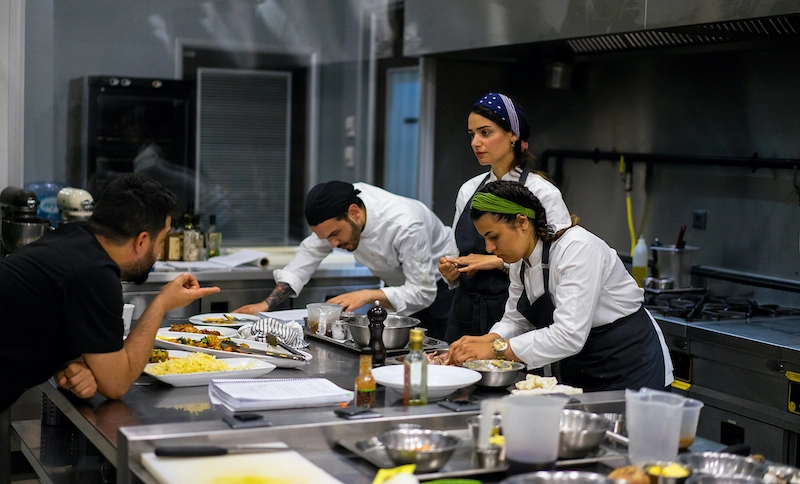
A culinary apprenticeship is a job and an education program combined into one. Apprenticeships are structured so that entry-level employees benefit from hands-on experience, mentorship, and classroom instruction, with pay that scales as they gain experience. Typically, apprenticeships last anywhere from a few months to a few years.
The core elements of apprenticeship, from built-in education to mentorship, are attractive from a hiring perspective because they draw candidates who are serious about pursuing a career in the industry.
The model is also gaining ground with major brands as a way to grow leaders from within. As Nation’s Restaurant News reports, Chipotle is expanding its apprentice program with the goal of placing an apprentice manager in every North American restaurant by the end of 2027. The role prepares employees for the general manager position.
According to the company, roughly 75% of its restaurants that already staff an apprentice manager earn stronger operational scores than those that don’t. Today, more than 85% of Chipotle’s restaurant managers started out as crew members.
An apprenticeship provides the space to develop culinary professionals who are serious about the craft.
What Is the ROI of a Registered Apprenticeship Program?
Apprenticeships follow a progressive wage structure, which means apprentices earn a paycheck from day one, with built-in raises as they develop new skills. For employers, that means wages grow alongside productivity, which keeps training costs manageable while developing talent from the ground up.
That structured investment yields a measurable financial return. A U.S. Department of Labor evaluation of the American Apprenticeship Initiative, a federal grant program to expand registered apprenticeships, found that the typical participating employer received $144.30 back for every $100 invested, for a median return on investment (ROI) of 44.3%. And 68% of employers broke even in the period after their apprentices completed the program.
Retention is what makes this return compound over time. Beyond direct daily output, national data shows registered apprenticeship programs maintain an average retention rate of roughly 80%. State-level tracking in North Carolina demonstrates even stronger long-term stability; across all industries, 90% of completers stayed with their original employer five years out.
The data demonstrates clear returns across both financial productivity and workplace stability:
The Business Impact of Registered Apprenticeships
Performance Metric / Employer Experience
Data / Finding
Median ROI on apprentice productivity
44.3%
Return generated per $100 invested
$144.30
Employers breaking even or recouping investment post-completion
What Are the Requirements for a Registered Apprenticeship Program?
Employers interested in launching an apprenticeship will need to meet the Registered Apprenticeship Program (RAP) requirements, which are validated and registered through the Department of Labor or a State Apprenticeship Agency and include five core components:
Industry-Led Design: The program is vetted and approved to align with industry standards
Paid Employment: Apprentices are employees from the start, earning progressive wages as their skills grow
Structured On-the-Job Training: Hands-on learning paired with an experienced mentor
Related Technical Instruction (RTI): Supplemental classroom education that complements the on-the-job component
A Portable Credential: A nationally-recognized credential apprentices gain upon completion
Hospitality businesses are already well positioned to meet these requirements. Pairing a new cook with a senior chef, for instance, provides the foundation for on-the-job training. For RTI, a trusted training partner can deliver the structured, compliant classroom instruction, allowing restaurants and private clubs to focus on what they do best.
Apprenticeship Case Study: Desert Mountain Club
Desert Mountain Club, a private-club community in Scottsdale, Arizona, operates 10 restaurants and grills across seven clubhouses and 8,300 acres. In 2026, the club worked with the state to establish a registered culinary apprenticeship program through the Arizona Department of Economic Security. Auguste Escoffier Global Solutions served as the workforce development partner, coordinating with Desert Mountain and the state to help build the program.
Under the program, Desert Mountain provides the paid employment, mentorship, and structured on-the-job culinary training, while Auguste Escoffier School of Culinary Arts provides the Related Technical Instruction through its Online Diploma in Culinary Arts and Operations.
Getting to journeyman status (meaning fully trained but not yet a master) under the program takes somewhere between 4,000 and 6,000 hours of hands-on kitchen work. Apprentices also have the option to spend six months to a year working at a partner club in France, adding an international, classically trained dimension to their development.
Desert Mountain Club also participates in Escoffier Global’s Work & Learn program, which helps support tuition costs for eligible staff members who enroll at Auguste Escoffier School of Culinary Arts.
Learning through traditional apprenticeship is how I built my own career in France, and it remains a highly effective way to develop skilled culinary talent. This program gives aspiring chefs the hands-on kitchen training and foundational knowledge they need to turn a passion for cooking into a lifelong, rewarding profession.
Where Does Apprenticeship Fit in Your Organization?
Apprenticeship shouldn’t be the only strategy you rely on to develop and support your team. You’ll still want to consider ongoing training, upskilling, and optimizing your hiring speed. However, apprenticeship can be a great tool for attracting candidates, developing them, and retaining them.
Auguste Escoffier Global Solutions can help with understanding where an apprenticeship fits inside your broader staffing and retention strategy. Reach out to discuss whether it’s the right fit for your business.
Learn how to handle restaurant staff shortages at peak times with immediate fixes, medium-term stabilization strategies, and long-term retention solutions.