The culinary and hospitality industries are experiencing a remarkable transformation. After years of pandemic-driven disruption and labor shortages, wages are climbing, job opportunities are expanding, and career paths are becoming more clearly defined than ever before.
For business owners, understanding these salary trends is essential for strategic planning—from budgeting for competitive compensation to forecasting labor costs in an increasingly competitive market. For job seekers, this data reveals where opportunities lie and what earning potential looks like across different career paths.
This analysis examines the latest Bureau of Labor Statistics data and industry research to provide a comprehensive look at the salary outlook for seven key culinary and hospitality positions through 2034.
Table of Contents
Industry Overview: Rising Wages, Expanding Opportunities Observations
Before we get into the analysis, here’s an at-a-glance table of current and projected salary and job growth for seven culinary and hospitality positions over the next decade.
Occupation
2024 Median Salary
Estimated 2034 Median Salary
Salary CAGR (2019 – 2024)
Jobs (2024)
Jobs (2034)
Projected Job Growth (2024–34)
Chefs and Head Cooks
$60,990
$85,439
3.43%
197,300
211,300
7%
Food Service Managers
$65,310
$91,028
3.38%
352,800
375,300
6%
Lodging Managers
$68,130
$106,743
4.59%
52,000
53,800
3%
Bartenders
$33,530
$67,226
7.20%
756,700
801,500
6%
Bakers
$36,650
$64,160
5.76%
249,100
263,200
6%
Restaurant Cooks
$37,730
$69,548
6.31%
1,460,200
1,677,200
15%
First-Line Supervisors of Food Prep/Serving Workers
The culinary and hospitality landscape shows promising momentum across nearly all major occupations. Current salaries range from around $33-42k for front-line roles like bartenders, bakers, cooks, and supervisors, and up to $60-68k for managerial positions including chefs, food service managers, and lodging managers.
The employment picture is equally encouraging. Restaurant cooks are projected to see the fastest growth at 15%, adding more than 200,000 jobs by 2034. Most other positions—chefs, food service managers, bartenders, bakers, and supervisors—are expected to grow at a healthy 6-7% clip, outpacing the average for all occupations. Only lodging managers show more modest growth at 3%, reflecting a relatively stable hotel management sector.
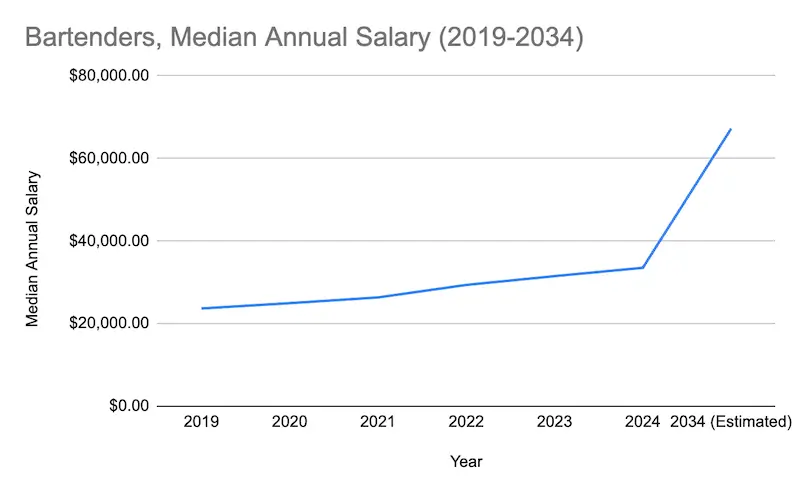
Perhaps most striking is the dramatic wage growth the industry has experienced in recent years. Median pay for chefs jumped from $51,530 in 2019 to $60,990 in 2024. Lower-paid roles have seen even faster increases, with bartenders, bakers, and restaurant cooks experiencing 5-7% annualized wage growth over the same period. This surge reflects post-pandemic labor shortages and broader inflation-driven wage adjustments that have fundamentally reshaped compensation expectations.
If these trends continue, the projections are remarkable. By 2034, restaurant cooks could earn an estimated $69,500—nearly double the current median—while bartenders might see their base pay climb to $67,200. Even accounting for inflation, these figures signal a significant shift in how the industry values its workforce.
A few caveats: these are national median figures, which means actual compensation varies widely based on experience, geographic location, and establishment type. Bartender wages, for instance, typically exclude tips, which can easily double take-home pay in busy venues. Top culinary professionals in major markets can command six-figure salaries, while entry-level workers start considerably lower.
Still, the trajectory is unmistakable. Wages are rising, demand is strong, and opportunities abound for those entering or advancing within the food and hospitality sectors.
Chefs and Head Cooks
2024 Median Salary: $60,990
2019-2024 Salary CAGR: 3.43%
Estimated 2034 Median Salary: $85,439
Projected Job Growth (2024-2034): 7%
Employment for chefs is projected to grow about 7% over the next decade—significantly faster than average. This growth, combined with approximately 24,000 annual openings created by retirements and career transitions, translates into robust opportunities for aspiring culinary leaders.
The salary picture continues to improve. Median pay is around $61,000 and projected to rise north of $85,000 by 2034; top chefs in premium markets can earn substantially more, making the financial prospects increasingly attractive. The upper end of the range can reach well into six figures for executive chefs at prestigious establishments, resort properties, or those who build personal brands.
Current dining trends favor chefs who bring innovation to the table. Consumer demand for healthy cuisine, globally inspired menus, farm-to-table concepts, and plant-based offerings creates opportunities for those with specialized skill sets. Whether it’s mastering regional ethnic cuisines, developing sustainable sourcing relationships, or creating cutting-edge vegetable-forward dishes, specialization provides a competitive edge.
The career pathway typically runs through the ranks. Given the strong demand for line cooks, kitchens actively promote talent from within, creating natural advancement opportunities from cook to sous chef to head chef. This internal mobility means dedicated professionals who demonstrate skill and leadership can move up relatively quickly in today’s market.
Food Service Managers
2024 Median Salary: $65,310
2019-2024 Salary CAGR: 3.38%
Estimated 2034 Median Salary: $91,028
Projected Job Growth (2024-2034): 6%
Food service management positions are projected to grow 6% through 2034, comfortably exceeding broader economic growth rates. As the number of restaurants, cafeterias, and food service operations expands, the demand for competent managers grows proportionally. With approximately 42,000 annual openings—primarily driven by promotions and retirements—opportunities are plentiful.
The role itself is evolving. Today’s food service manager needs more than operational knowledge; they must possess a blend of operational savvy, people skills, and technological fluency. Understanding point-of-sale data, managing inventory systems, analyzing labor costs, and cultivating a high-quality team have become table stakes. The managers who thrive are those who can interpret data, make strategic decisions, and lead teams effectively.
Current median pay of about $65,000 is projected to increase to more than $91,000 over the next ten years as competition for experienced managers intensifies. The challenge of filling these positions creates upward wage pressure, particularly for managers who can demonstrate success in improving sales, controlling costs, or enhancing operational efficiency.
Lodging Managers
2024 Median Salary: $68,130
2019-2024 Salary CAGR: 4.59%
Estimated 2034 Median Salary: $106,743
Projected Job Growth (2024-2034): 3%
Lodging management shows more modest growth at 3% over the next decade, reflecting a relatively mature hotel sector. However, certain segments—particularly luxury resorts, boutique hotels, and experiential properties—may see more dynamic expansion.
With only about 52,000 jobs nationwide, this is a competitive field where advancement requires both skill and strategic career management. Formal education in hotel management remains a common requirement, with many major hotel chains specifically requiring degrees for their management training programs.
The compensation picture is solid; median pay is around $68,000 and could rise to nearly $107,000 by 2034. Top-tier resorts, luxury urban hotels, and boutique properties often pay general managers well into six figures. The post-pandemic environment has likely pushed these figures higher as hotels compete to attract and retain management talent.
Career progression in lodging often involves geographic mobility. Rising through the ranks may require relocating to different properties or markets, as opportunities at any single location are limited. However, hotels frequently promote from within—front desk supervisors become front office managers, who then advance to assistant general manager and eventually general manager positions. This internal pathway means those who start in entry-level roles and demonstrate leadership can build substantial careers.
Bartenders
2024 Median Salary: $33,530
2019-2024 Salary CAGR: 7.20%
Estimated 2034 Median Salary: $67,226
Projected Job Growth (2024-2034): 6%
Bartending represents one of the more accessible entry points into hospitality, with projected job growth around 6% and massive turnover creating more than 130,000 annual openings. While many positions are part-time, this translates into abundant opportunities for those seeking flexible work or entry into the industry.
The compensation story requires context. Median base pay sits around $33,500 annually, and is projected to rise to more than $67,000 by 2034. However, tips can easily inflate that figure in busy establishments. Skilled bartenders in high-volume or upscale venues can earn significantly more, with total compensation already sometimes reaching $60,000-70,000 or higher in major metropolitan areas.
The profession has evolved considerably. The rise of craft cocktails, specialty spirits, and artisanal techniques has elevated bartending from a service job to a skilled craft. Talented mixologists in major markets command premium compensation and can advance into bar management, consulting, or even bar ownership. Knowledge of spirits, wine, beer, and classic and contemporary cocktail techniques has become valuable expertise.
Entry barriers remain low—no formal credentials are required beyond meeting the legal drinking age and possibly obtaining responsible alcohol service certification. This makes bartending an attractive option for career changers or those seeking flexible employment while pursuing other goals.
Bakers
2024 Median Salary: $36,650
2019-2024 Salary CAGR: 5.76%
Estimated 2034 Median Salary: $64,160
Projected Job Growth (2024-2034): 6%
Baking occupations show healthy 6% projected growth through 2034, comfortably above the broader economy’s pace. With approximately 40,000 annual job openings—mostly driven by turnover in retail bakery positions—opportunities exist throughout the sector.
Median pay was around $36,650 in 2024, and is projected to rise to roughly $64,000 over the next ten years. Pay can be higher in certain settings; specialty pastry shops, high-end grocery bakeries, unionized commercial bakeries, and restaurants with scratch bakery programs often pay premium wages for skilled bakers. Self-employment is also common, with many bakers operating home-based or small-batch businesses, though these don’t appear in official employment statistics.
The artisan and specialty bakery segment shows particularly strong growth. Consumer appetite for artisan breads, European-style pastries, gluten-free products, and innovative baked goods has created a boom in boutique bakeries. Similarly, the farm-to-table movement has driven demand for in-house baking programs at restaurants—skilled bakers who can produce breads, pastries, and desserts from scratch are increasingly valued.
The work itself is demanding, often requiring very early morning shifts and physical stamina for mixing dough, shaping products, and managing ovens. However, for those passionate about the craft, there’s a clear progression from baker to head baker to pastry chef, with increasing creative control and compensation at each level.
Restaurant Cooks
2024 Median Salary: $37,730
2019-2024 Salary CAGR: 6.31%
Estimated 2034 Median Salary: $69,548
Projected Job Growth (2024-2034): 15%
Restaurant cooks represent one of the largest and fastest-growing occupations in the sector. With projected 15% employment growth adding well over 200,000 jobs by 2034, opportunities are abundant as restaurants expand and kitchens require more hands.
This category encompasses line cooks and prep cooks across the spectrum—from casual diners to upscale fine dining establishments. The current median pay of $37,730 has risen sharply, with over 6% annual wage growth from 2019 to 2024; that figure could rise to nearly $70,000 by 2034. Even with these improvements, many restaurants struggle to hire enough cooks, as the role historically offered relatively low pay combined with challenging conditions including heat, stress, and long hours.
The persistent labor shortage has changed the equation. Many restaurants now offer signing bonuses, higher starting wages, more reasonable hours, and better working conditions to attract cooks. This competition for talent has fundamentally improved both compensation and workplace quality.
The career pathway remains accessible. Cooks can start with minimal formal training and advance through dedication and skill development. Many successful chefs began as dishwashers, progressed to prep cook, moved to the line, and eventually became sous chefs. This mobility is particularly pronounced now given the shortage—hardworking individuals who demonstrate competence and reliability can advance relatively quickly.
First-Line Supervisors of Food Prep and Serving Workers
2024 Median Salary: $42,010
2019-2024 Salary CAGR: 4.69%
Estimated 2034 Median Salary: $66,461
Projected Job Growth (2024-2034): 6%
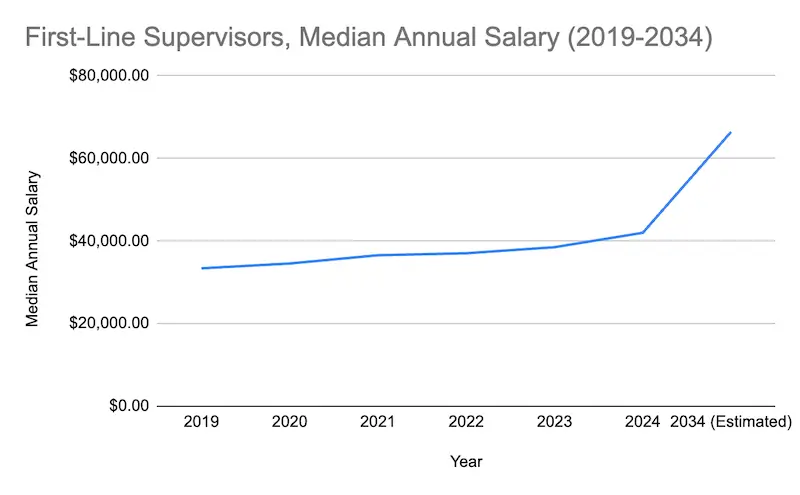
First-line supervisors—the shift leaders, assistant managers, and crew chiefs who manage day-to-day operations—show projected 6% growth, adding substantial positions by 2034. With over 1.2 million such supervisors currently employed, this is a significant occupation segment typically filled by employees promoted from server, cook, or bartender positions.
Median pay around $42,000 (projected to rise well above $66,000 by 2034) sits between line-level workers and higher managers, reflecting the position’s middle-management role. These positions carry significant responsibility—managing teams, handling customer issues, overseeing opening or closing procedures, managing cash, and ensuring service standards—though compensation doesn’t always reflect the demands.
The current staffing environment creates opportunities. Restaurants struggling to fill positions often promote reliable employees to supervisory roles quickly. Those who demonstrate leadership, train new hires, and take initiative frequently find themselves offered shift supervisor positions faster than in previous eras.
This role serves as a critical stepping stone to full management. The skills developed—scheduling, inventory management, conflict resolution, staff coaching, and operational oversight—translate directly to restaurant manager and general manager positions with substantially higher compensation.
Your Next Steps in a Thriving Industry
The culinary and hospitality industries offer expanding opportunities and improving compensation across nearly every major occupation. From restaurant cooks seeing 15% job growth to chefs and managers commanding increasingly competitive salaries, the outlook for 2025 and beyond is encouraging.
For business owners, these trends underscore the importance of competitive compensation and workforce development as salaries rise industry-wide. For job seekers, strong demand and clear progression paths create an environment where dedication and skill development are rewarded.
Escoffier Global offers specialized consulting, training, and workforce solutions for culinary and hospitality businesses navigating this landscape. Contact us to learn how we can help you build stronger teams. Job seekers can explore opportunities through EConnect, our exclusive job board connecting professionals with employers who value growth and development.
Want to see more of what Escoffier Global has to offer? Check out these articles next:
Learn how to handle restaurant staff shortages at peak times with immediate fixes, medium-term stabilization strategies, and long-term retention solutions.